Saint-Gobain and AGC Team Up to Build the World’s Largest Electric Furnace for Flat Glass, Targeting 50% Lower CO2 Emissions
The FurHy project at Saint-Gobain’s Avilés plant in Spain builds on lessons from a smaller pilot furnace in the Czech Republic, and could reshape how the industry thinks about decarbonizing glass melting
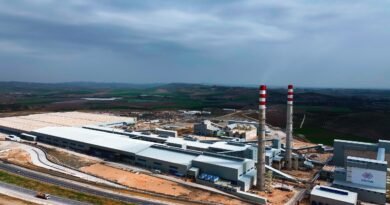
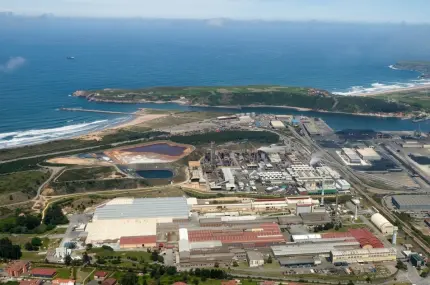
Two of Europe’s flat glass heavyweights are joining forces on a furnace project that pushes electrification further than anything the industry has attempted at scale. Saint-Gobain and AGC Group have announced a technological partnership to deploy a large-scale hybrid electric furnace at Saint-Gobain’s flat glass plant in Avilés, Spain, replacing the facility’s existing furnace entirely.
Construction is slated to begin in January 2027, with the new furnace expected to resume production in the second half of that year. Once running, it will stand as the largest electric furnace ever built for flat glass production, a genuine first for the industry.
Building on a Proven Pilot
The Avilés project, known internally as FurHy, doesn’t emerge from nowhere. It follows a technological collaboration between the two companies dating back to 2023, when they jointly ran VOLTA, a smaller pilot electrified furnace in the Czech Republic. That pilot did the hard work of proving electrification could actually work at the technical level, and FurHy represents the leap from proof of concept to industrial scale.
The hybrid design is engineered to reach 75% electrification of the melting process itself, a substantial technical jump for a manufacturing process that has historically leaned almost entirely on gas-fired furnaces. Power for the furnace will come from low-carbon electricity, secured through renewable energy supply agreements that Saint-Gobain has contracted directly in Spain.
The Emissions Math
The companies are projecting meaningful numbers once the furnace is fully operational. Annual CO2-equivalent emissions are expected to drop by roughly 80,000 tonnes, translating to about a 50% reduction compared to a conventional gas furnace running the same output. Natural gas consumption is projected to fall by approximately 265 GWh per year, an 80% reduction against a standard gas furnace baseline.
Beyond the emissions figures, the project is positioned to supply lower-carbon flat glass that meets leading international sustainability standards, feeding growing demand across residential, non-residential, and infrastructure construction markets in the region.
What the Companies Are Saying
Nicolas Miègeville, Chief Technology Officer at Saint-Gobain, framed the project as a natural extension of the companies’ ongoing technical partnership, pointing to it as evidence that pioneering furnace technology can move from lab-scale thinking into full industrial deployment. He linked the milestone to Saint-Gobain’s broader net-zero commitments and credited European Innovation Fund backing as instrumental to getting the project off the ground.
Davide Cappellino, President of Architectural Glass Europe & Americas at AGC, situated the Avilés furnace within AGC’s own decarbonization timeline, which includes its low-carbon glass range launched at the end of 2022 and an earlier hybrid melter installed on a patterned glass line in Barevka, Czech Republic. He described the new furnace as a significant leap forward in the electrification of flat glass melting specifically.
Why It Matters for the Industry
Flat glass manufacturing has long been one of the harder segments of the glass industry to decarbonize, given how energy-intensive furnace melting is and how difficult it’s been to run that process on anything other than gas at meaningful scale. A successful large-scale hybrid furnace at Avilés would give the rest of the industry, including manufacturers watching from India and elsewhere, a working template for what furnace electrification looks like outside a pilot environment.
The project is funded through the European Union’s Emissions Trading System (ETS) Innovation Fund.
Based on a joint press release issued by Saint-Gobain and AGC Group.