AGC Joins Malaysia’s Landmark Nearly-ZEB Retrofit Pilot, Betting on Glass to Cut Building Energy Use by Three-Quarters
Tokyo-based glass major brings Low-E and photovoltaic glazing to Southeast Asia’s first net-zero retrofit of an existing office tower
Japanese materials giant AGC Inc. has signed on as a technology partner in what’s being billed as Malaysia’s inaugural Nearly Zero Energy Building (Nearly ZEB) retrofit – a pilot scheme targeting a 75% cut in primary energy use at an aging office block, using little more than smarter glass and rooftop-to-facade solar integration.
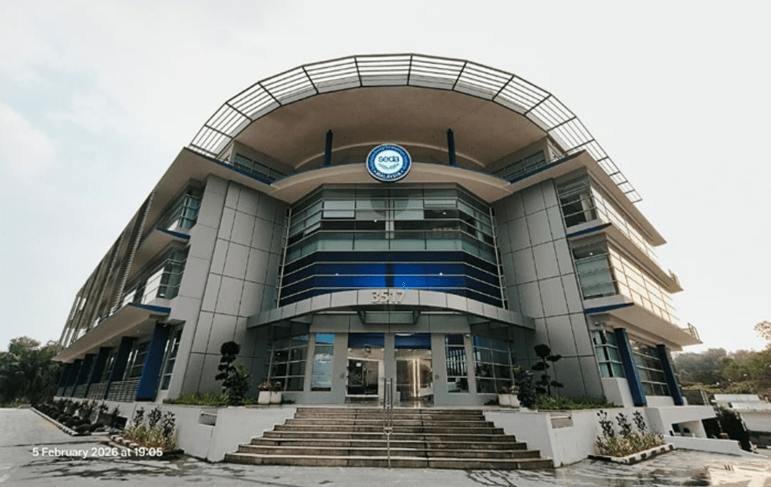
The building in question belongs to Malaysia’s Sustainable Energy Development Authority (SEDA) itself – a fitting test case, given the agency’s own mandate. At 21 years old, the headquarters was never designed with net-zero ambitions in mind, which is exactly why NEDO (Japan’s New Energy and Industrial Technology Development Organization) and SEDA chose it: proving that deep energy retrofits work on ordinary, aging stock – not just new-build showcases – is the whole point of the exercise. The project marks a first for the Malaysian market, where ZEB conversions of existing commercial buildings have yet to be attempted at this scale.
Glass as infrastructure, not just enclosure
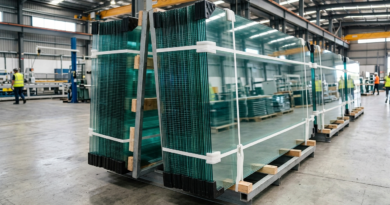
AGC’s contribution leans on two product lines that treat the building envelope as an active energy system rather than a passive barrier. Its Stopray Vision 40T, a high-performance Low-E coated glass, is engineered to let daylight flood in while keeping solar heat and thermal transfer in check — addressing the classic retrofit tension between comfort and consumption without resorting to heavy tinting or an overhauled facade aesthetic.
Sitting alongside it are AGC’s SunEwat Vision and SunEwat SUDARE ranges — building-integrated photovoltaic (BIPV) glazing that turns window surfaces themselves into power generators. For retrofit projects especially, where roof space or land for conventional solar arrays is often limited, generating electricity through the vertical envelope offers a workaround that doesn’t disrupt the building’s appearance or footprint.
A regional decarbonization play
For AGC, the SEDA project reads as much as a proof-of-concept for ASEAN expansion as a one-off engagement. The company has framed its involvement around tailoring energy-saving and power-generating glass technologies to local climate and building-use conditions – language that signals an eye toward replicating the model across other tropical, humidity-heavy markets in the region where cooling loads dominate energy bills.
The initiative sits within a broader NEDO-led push to export Japanese energy-efficiency know-how into Southeast Asia, with SEDA Malaysia serving as the on-the-ground counterpart. Full technical details of the collaboration are available via NEDO’s official release.
AGC Inc., parent of the AGC Group, ranks among the world’s largest glass solutions providers, with roughly 56,000 employees and annual sales near ¥1.7 trillion across some 30 countries.